
Publication Ethics
Review Process
Our editors carefully read and consider every article regardless of when it is submitted. The CSP Journal occasionally solicits feedback on submissions from faculty and practitioners who are experts in their fields. Please be aware that this peer review is part of the standard review process that the article may undergo.
Before sending an article out for peer review, we remove information that identifies the author (double-blind peer review), although the reviewer may be familiar with the article if it has been presented at a workshop or conference or circulated online.
Our editors always seek to review articles within a few weeks after receiving them, but it might take longer to reach a decision when submission volumes are high. If we are unable to extend a publication offer, we will notify the author promptly by specifying the reasons for rejection. When the CSP Journal decides to publish an article, we contact the author immediately to extend an offer.
Only authors who meet the following criteria will be listed as authors (or co-authors):
- Made significant contributions to the conception or analysis of the study;
- Revised it critically in accordance with reviewers’ comments;
- Approved the final version of the paper for publication.
Plagiarism Policy
All submitted manuscripts are checked for plagiarism after submission and before starting the review. Manuscripts submitted to the journal are checked for originality using anti-plagiarism software. CSP’s editorial team will judge any case of plagiarism based on its limits.
If plagiarism is detected by the editorial team at any stage of the review process—before or after acceptance—we will alert the author(s) and ask them to rewrite the content or cite the sources correctly.
If more than 30% of the paper is plagiarized, the article may be rejected and the author notified. If plagiarism exceeds 30%, it is found that authors are unlikely to revise the manuscript successfully. However, authors are welcome to perform the required revisions and submit the work as a new submission.
By submitting a manuscript to the journal, author(s) ensure that it is an original, unpublished work and is not under consideration elsewhere. Plagiarism, including duplicate publication of the author's own work, in whole or in part without proper citation, is not accepted.
Publication Malpractice Statement
The journal upholds the highest standards of integrity in research and publication ethics. Misconduct or malpractice in any form will not be tolerated. All forms of unethical behavior, including undisclosed conflicts of interest or manipulation of the peer review process, are strictly prohibited. Editors and reviewers are required to act with integrity, impartiality, and confidentiality. Any suspected cases of misconduct will be investigated and may result in rejection or retraction.
Policy on Allegations of Misconduct
The journal takes all allegations of research and publication misconduct seriously. Suspected cases of data fabrication, falsification, image manipulation, plagiarism, duplicate submission, authorship disputes, or unethical research practices will be investigated by the Editorial Board.
When concerns are raised, the editorial team will conduct a preliminary assessment. If warranted, the case will be investigated in consultation with the authors’ institution or relevant bodies. Proven misconduct may result in manuscript rejection, publication retraction, corrections, or notifications of concern.
Policy on Appeals of Editorial Decisions
Authors have the right to appeal editorial decisions if they believe their manuscript was not evaluated fairly. Appeals must be submitted in writing within 30 days of the decision. The appeal should include the manuscript’s title, a detailed explanation of the reason for the appeal, and any supporting evidence.
Appeals will be reviewed by the Editor-in-Chief. The outcome will be communicated in writing, and the decision of the Editor-in-Chief is final. For appeals, please contact: editorcspjournal@gmail.com
Complaints Policy
Complaints may relate to the journal’s editorial policies, the peer review process, published content, or allegations of misconduct. Complaints should be submitted in writing to the journal office. Complainants will receive an acknowledgment within 7 working days and a full response once the issue has been investigated. For complaints, please contact: editorcspjournal@gmail.com
Conflicts of Interest Policy
All potential conflicts of interest (COIs) must be disclosed to protect the credibility of the scholarly record.
What constitutes a conflict of interest?
A conflict of interest exists when professional judgment concerning a manuscript may be influenced by personal, financial, academic, or other relationships. COIs may be financial (e.g., funding, employment, stock ownership) or non-financial (e.g., personal relationships, academic competition).
Application to journal roles
- Authors: Must declare all relevant financial and non-financial COIs at submission, including sources of funding.
- Reviewers: Must disclose any COIs that may affect their objectivity and decline reviews where a conflict exists.
- Editors: Must recuse themselves from handling manuscripts where a conflict of interest exists.
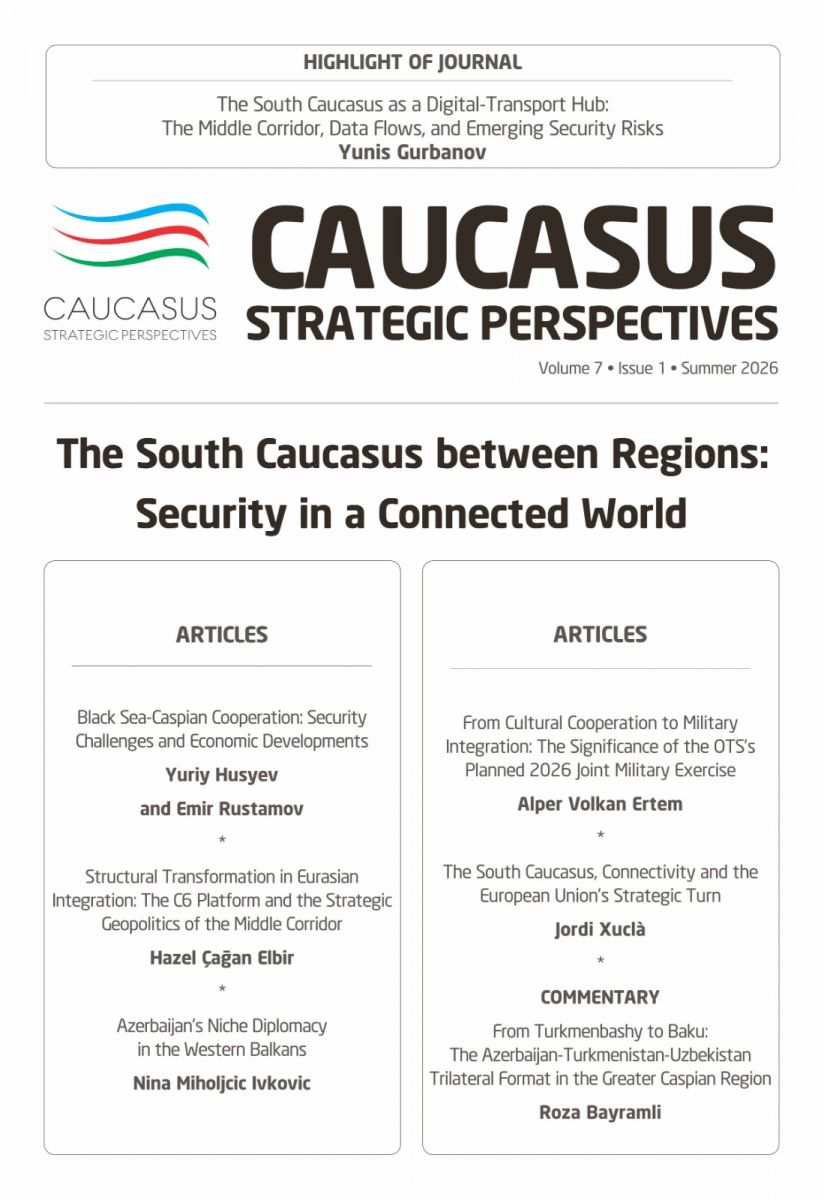


Latest news
Popular articles
- 07/18/2022 The Russia–Ukraine War: Perspective of Azerbaijan 8219 views
- 10/14/2020 The Non-Aligned Movement: In Pursuit of Validity and Relevance in the Contemporary Global Order 5610 views
- 10/14/2020 Vicious Circle of the South Caucasus: Intra-Regional Conflicts and Geopolitical Heterogeneity 4822 views
- 10/14/2020 Relevance of Non-Alignment for Azerbaijan’s Foreign and Security Policy 4638 views